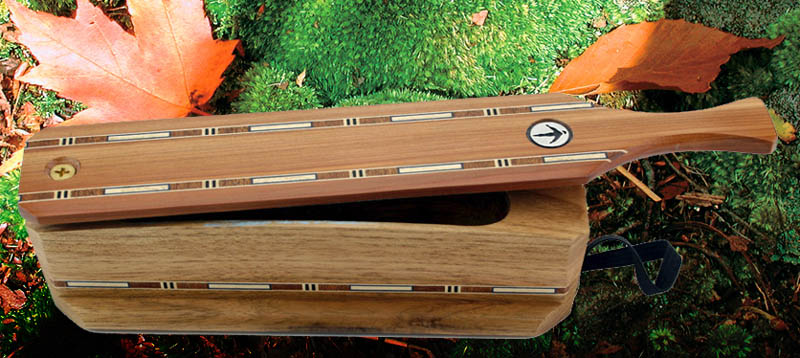
MAINTENANCE TIPS
With normal usage, your box call will need very little
maintenance however long term periodic
maintenance and up keep such as buffing or lightly sanding the lid
and adjusting the lid screw may become necessary. I do not recommend sanding the
soundboards or sides of the call since only a few strokes of sand
paper can destroy the response and sound of your call in short order and
cannot be undone.
Box call sounds are generated by frictional contact
between the movable lid and the stationary sides or soundboards of the box
call. Over time, the lid and sides of the call will wear smooth and
friction between the two points of contact will diminish changing the sound
of the call or in extreme cases no sound at all. The short term daily
fix is the application of chalk and I personally use
the half spherical shaped blue chalk commonly called carpenter’s chalk. Do
not use chalk that contains oils!
After using your box call you will notice the normal wear
pattern between the lid and the sides of the call and the shape of the wear
pattern will be similar to the letter W or a butterfly
depending on the design of your call. The chalk wear area on the lid is the
only area you will need to chalk if the other area has adequate chalk. How
often you chalk your call is a personal matter but chalk when the normal
sound of the call changes or you cannot feel the lid “grab” the sides of the
call. This will really show up when you are doing calls sounds like purring
as a purr requires continuous frictional contact.
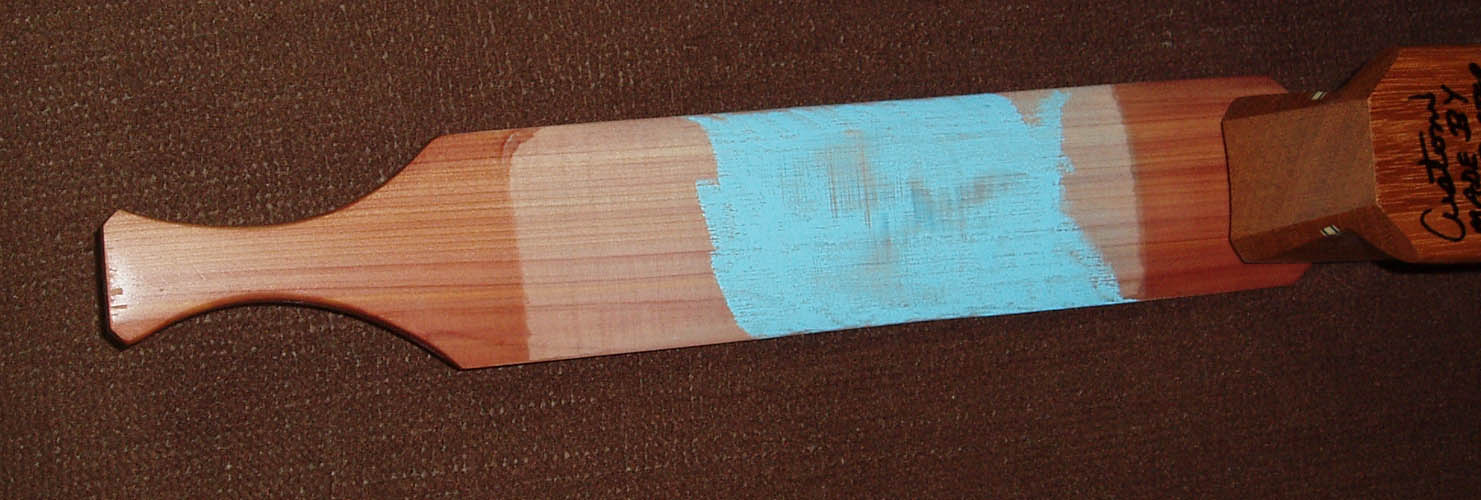
Some chalk with the grain of the lid going lengthwise
and others chalk perpendicular to the lid. Try each direction to see which
applies the most chalk to your lid.
When the application of chalk does not produce the
desired effect and it is obvious there is a smooth wear pattern due to
compression and wear of the wood on the lid,
rotate the lid away from the box and turn the call upside down and sand a
half dozen gentle strokes lengthwise using either Scotch-Brite pad or 150 grit
sandpaper and this should give you enough friction lines for the call to properly
work. Note: I have used some box calls for many years and they
have not required sanding the lid!
Most call users will “tinker” with their box call
moving the adjustment screw in or out. “If it ain’t broke, don’t fix
it”. Moving the screw in or out will change the contact angle between
the lid and the sides of the call changing the pitch and frequency response
of the call. Each call that I hand tune has the screw adjusted where the
lid is at a very slight angle downhill toward the handle end of the lid and
sometimes it will be more or less level depending on the desired sound and
playability of the call. Box call bodies from very soft wood such as
Butternut, the adjustment screw will become loose over time if one continues
to “mess” with the screw which will require gluing a small piece of filler
wood back into the screw hole and in extreme cases, drilling the hole
oversize and installing a wooden dowel and then drilling a new countersink
hole. Remember, “If it ain’t broke, don’t fix it.”
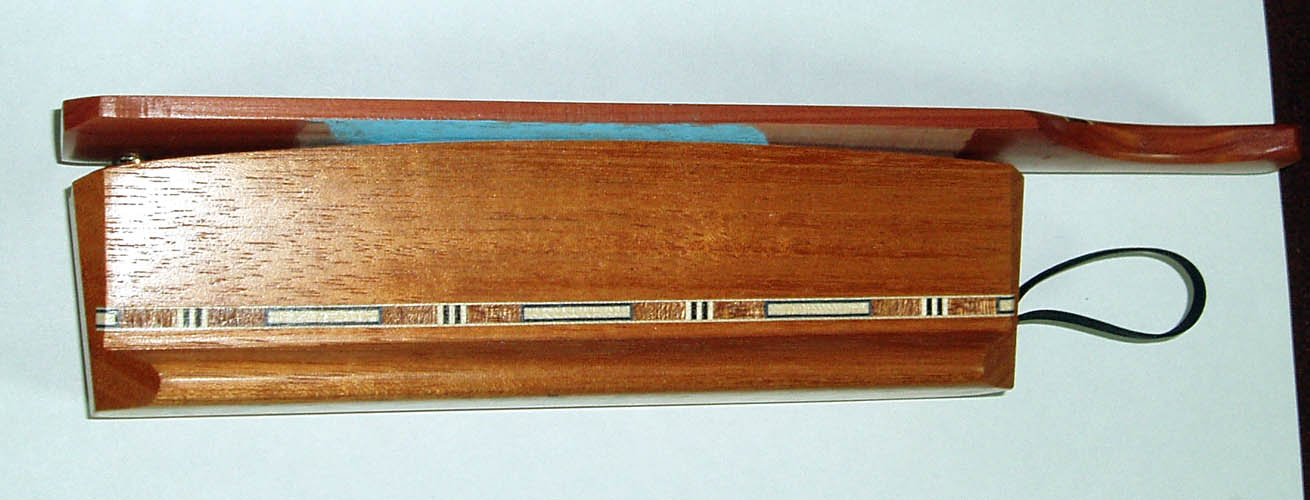
On this Mahogany “Dual Hens” call, you
can see the slight angle whereas there is a little more gap between the lid
and the call body at the screw end of the call than at the handle end of the
call. This angle will vary a little from call to call in order to have the
lid contact the soundboard or side of the lip at the “sweet spot”
or slightly forward of the center of the call toward the handle end.
It should be noted that the longer stroke you take when
operating the call will cause the lid to make contact with the area much
closer to the screw end of the call which will give a different somewhat
higher pitched sound. My calls are designed to use a much shorter stroke
for optimum sound resonance and requires less movement which is a plus. If
you desire to make a Kee Kee call with a much higher pitch sound, then use
the soundboard further toward the screw end of the call without the sound
rolling or breaking over into a yelp and then finish the Kee Kee sound off
with a completed yelp sound!
I will discuss ways to make different sounds in another
section of the website. Below pix of the normal operating lid angle
or
position of my box calls. This shallow stroke angle helps the
resonance of the call.
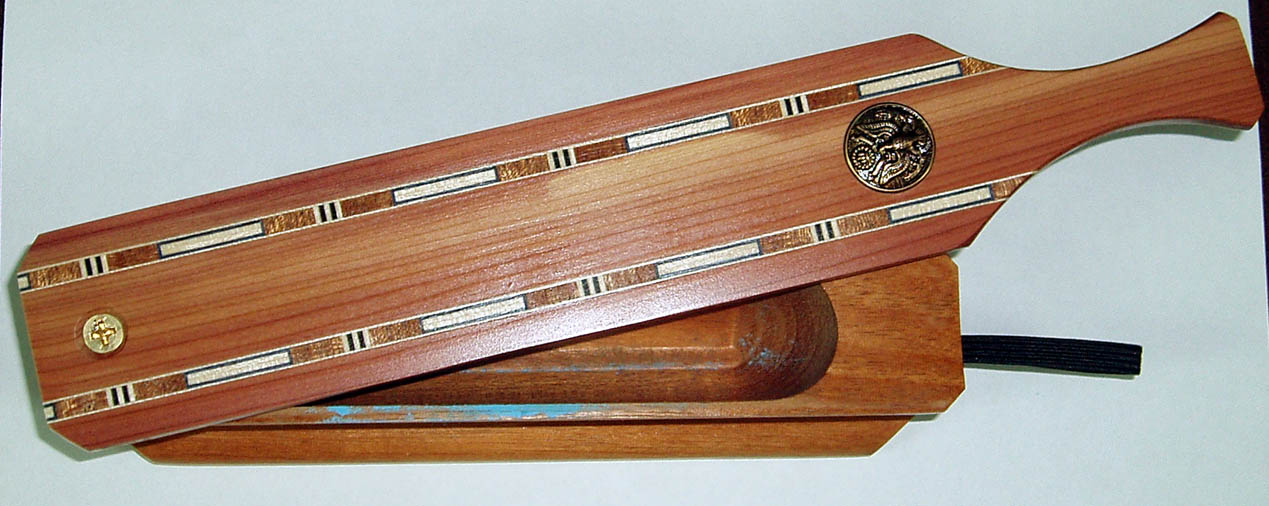
Some hunters operate their lid at an acute angle as
much as forty-five (45) degrees but it is not necessary with my Dual Hens
call.
My calls are not waterproof treated, therefore
take appropriate action to protect call when used in wet and inclement
weather. I carry my personal box calls in a large zip lock style clear
plastic bag
for protection.
Good Calling and Good Hunting!
I no longer donate calls to NWTF chapters or support the organization
due to alcoholic bars set up with free drinks as a means to
inebriate potential high dollar spenders and bidders at their banquets.
This is a disgusting and immoral way to conduct business to raise money in my
humble opinion! Also, the usage of
"bar maids" (literally and figuratively) to serve the drinks and assist in the auction is
low class. When you are
of the world, this is a normal protocol.
Web page updated by Bill aka Mickey Porter on 11-26-17.
LEAVING ON A
SPIRITUAL NOTE
If you do not know Jesus Christ as your Lord and Savior, please take this
moment to accept him by Faith into your Life, whereby Salvation will be
attained.
Ephesians 2:8 - 2:9 8 For by grace are ye saved through faith;
and that not of yourselves: [it is] the gift of God: 9 Not of works, lest
any man should boast.
Hebrews 11:1 “Now faith is the substance of things hoped for, the
evidence of things not seen.”
Romans 10:17 “So then faith cometh by hearing, and hearing by the
word of God.”
Open this
link about faith in the King James Bible.
Romans 10:9 “That if thou shalt confess with thy mouth the Lord
Jesus, and shalt believe in thine heart that God hath raised him from the
dead, thou shalt be saved.”
Open this
link of Bible Verses About Salvation, King
James Version Bible (KJV).
Hebrews 4:12 “For the word of God is quick, and powerful, and
sharper than any two edged sword, piercing even to the dividing asunder of
soul and spirit, and of the joints and marrow, and is a discerner of the
thoughts and intents of the heart.”
Romans 6:23 “For the wages of sin is death; but the gift of God is
eternal life through Jesus Christ our Lord.”
Romans 3:23 “For all have sinned, and come short of the glory of
God;”
Micah 6:8 “He hath shewed thee, O man, what is good; and what doth
the LORD require of thee, but to do justly, and to love mercy, and to walk
humbly with thy God?”
Philippians 4:13 "I can do all things through Christ which
strengtheneth me."
HOME PAGE