|

  
FILET MIGNON WITH PINOT NOIR BLACKBERRY SAUCE
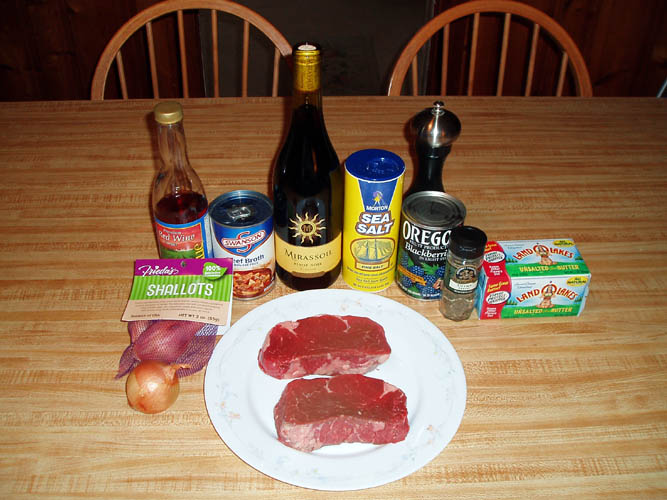
INGREDIENTS:
1 filet mignon (8 oz. per serving)
Extra virgin olive oil
Sea or Kosher salt (to taste)
Freshly ground black peppercorns
(Tellicherry) -
to taste
1 strip of bacon per filet mignon
Butcher twine or toothpicks
PINOT NOIR BLACKBERRY SAUCE
INGREDIENTS:
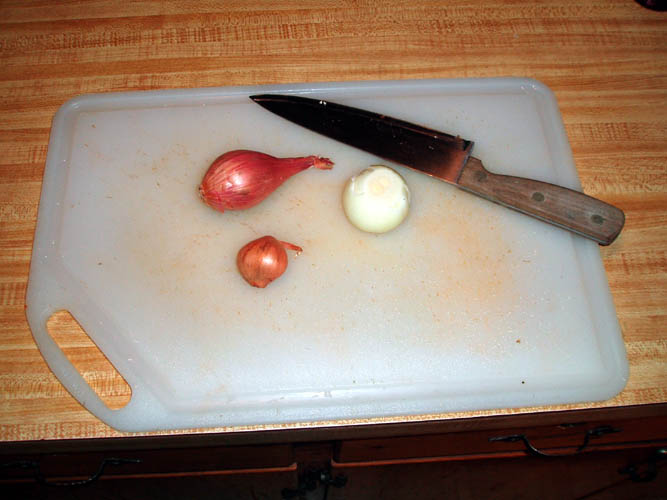
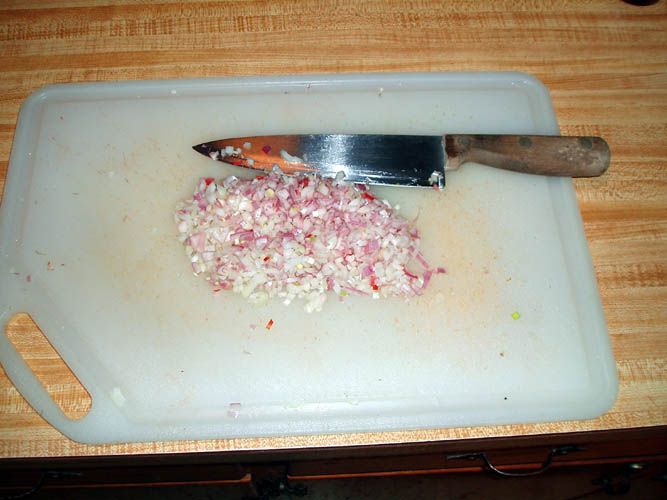
2 shallots, finely chopped
1 small onion, finely chopped
1/4 teaspoon dried thyme
1/2 cup Pinot Noir wine, Viridian or your choice
2 tablespoons any fruit vinegar or red wine vinegar
2 cups beef broth, prefer
Swanson brand
1 heaping cup of blackberries fresh or frozen (canned if you have to)
Extra blackberries for garnish (optional)
1/4 cup
butter
Salt (to taste)
Freshly ground black peppercorns
(Tellicherry)
to taste
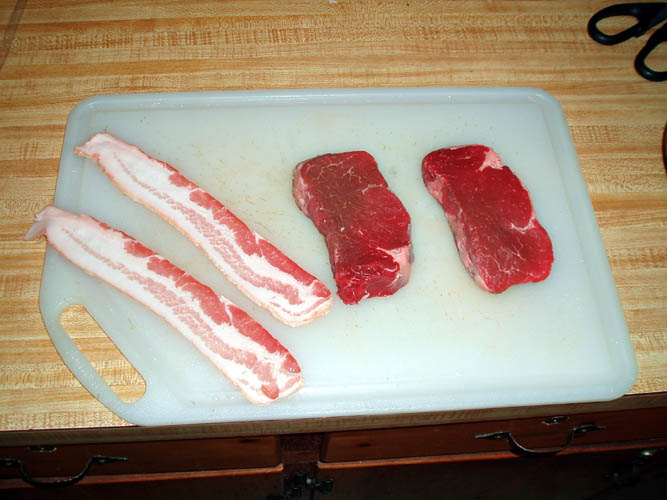
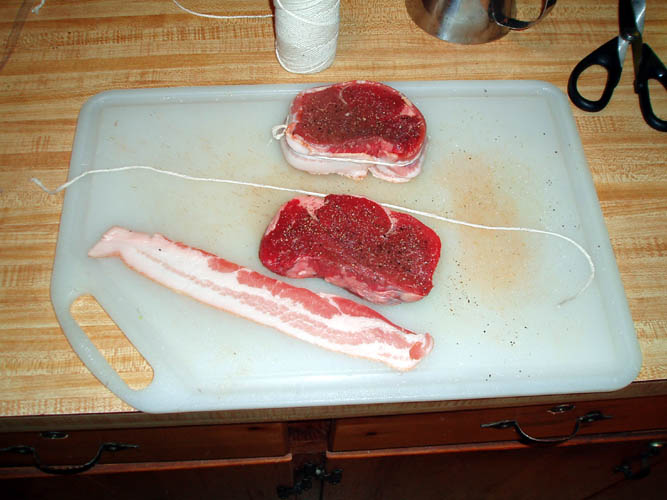
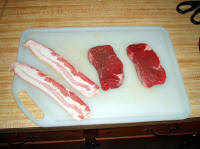
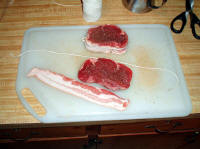
Have butcher cut the filet mignon about 2 inches thick but no thinner than 1
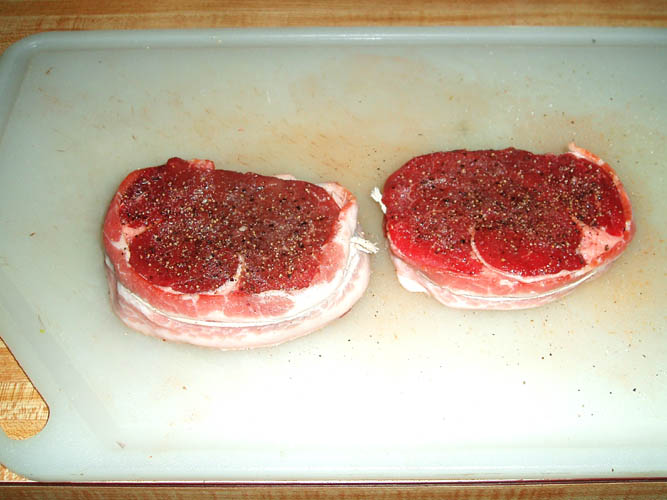
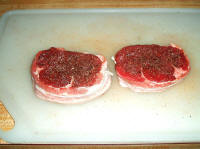
inch. Wrap each filet mignon with a strip of bacon securing in place
with butchers twine or a toothpick. Coat top and bottom of filet
mignon with extra virgin olive oil and rub into meat. Apply a generous
amount of sea or Kosher salt and freshly ground black peppercorns into
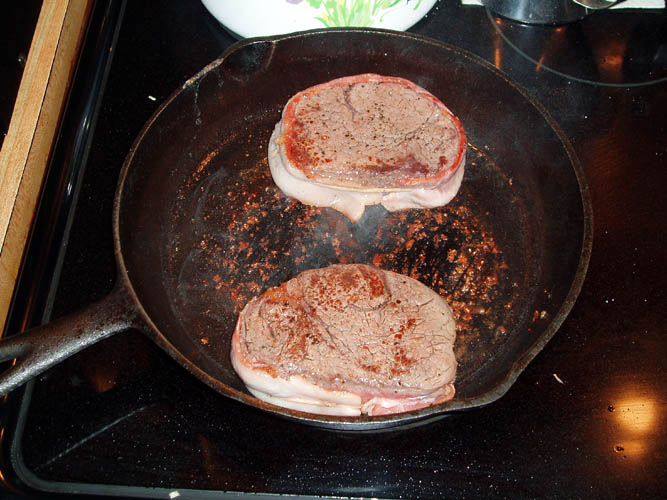
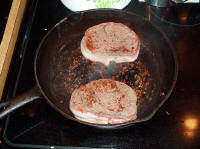
filet on both sides. Heat a cast iron or oven proof skillet on
medium-high heat with a thin coating of olive oil and braze each side (about
3 minutes each) of filet mignon sealing the pours. Place skillet with
the filet mignon into a 350 degree oven for 20 to 25 minutes which should be
medium rare. Check filet mignon with a meat thermometer to verify the
internal temperature of the steak. See chart below for reference. When
the filet mignon is cooked to the desired doneness, remove and place on a
warm serving plate.
NOTE: I normally do all my steaks on a Weber kettle grill
with charcoal but it has been raining all
weekend so the oven or stove top will get you by in a pinch. I am a
firm believer that a charcoal steak is the best and that is solely my
opinion but shared by millions! I have broiled and pan fried steaks
with excellent success also.
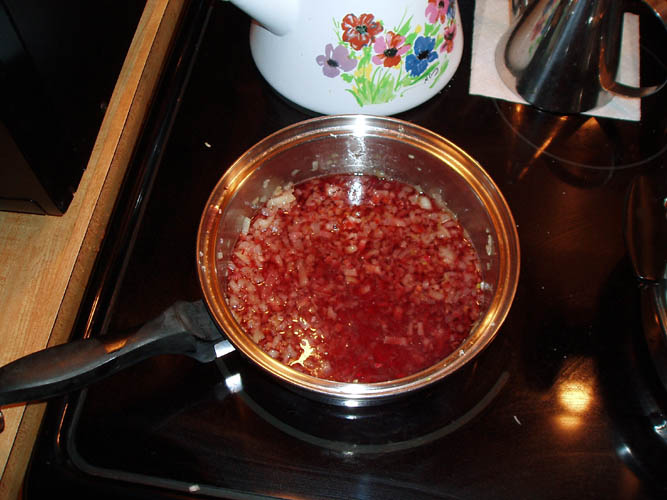
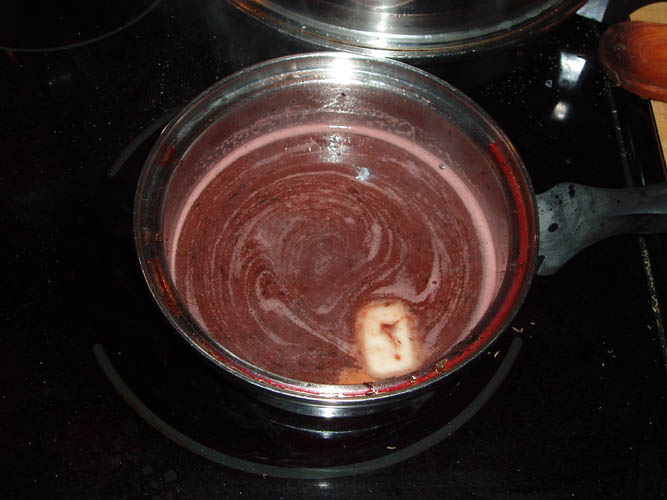
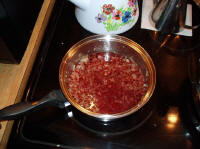
Start your Pinot Noir blackberry sauce ahead of the filet mignon since it
will take a little longer to complete the sauce. Sauté onions and
shallots over medium high heat in a little olive oil until soft and golden
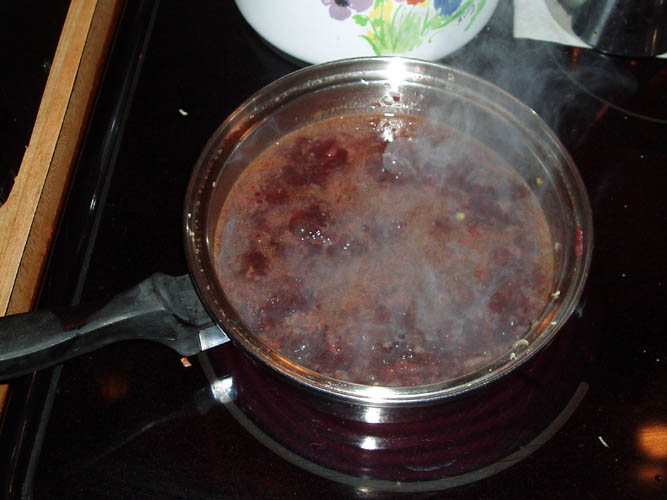
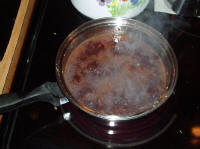
taking care not to burn them. Over medium high heat, heat up wine and
vinegar. Boil until liquid is thick, about 10 minutes. Add stock,
thyme
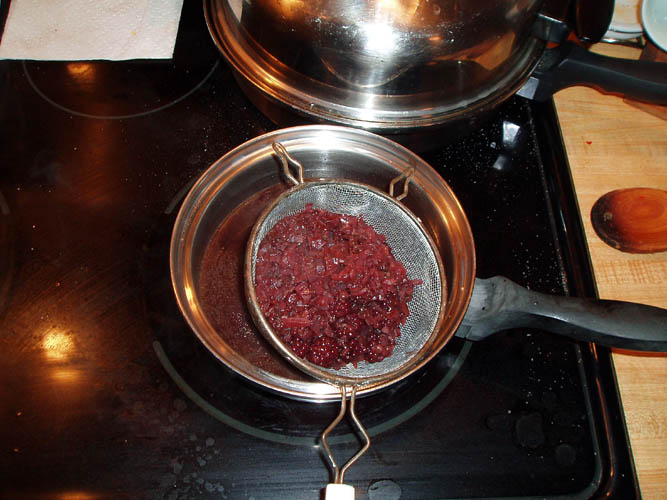
and 1 cup of the berries. Bring to boil and simmer until reduced to 1
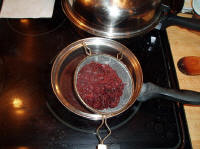
cup. Using a fine mesh strainer, strain into medium saucepan, pressing
solids to extract flavors. This can be made several days in advance
and kept in the refrigerator. When ready to serve, return sauce to a simmer.
Whisk in 1/4 cup butter. Remove from heat. Add remaining berries to
garnish. Serve with grilled, baked or broiled meat, chicken or fish,
sprinkling a handful of reserved whole berries around the serving plate is
you desire.
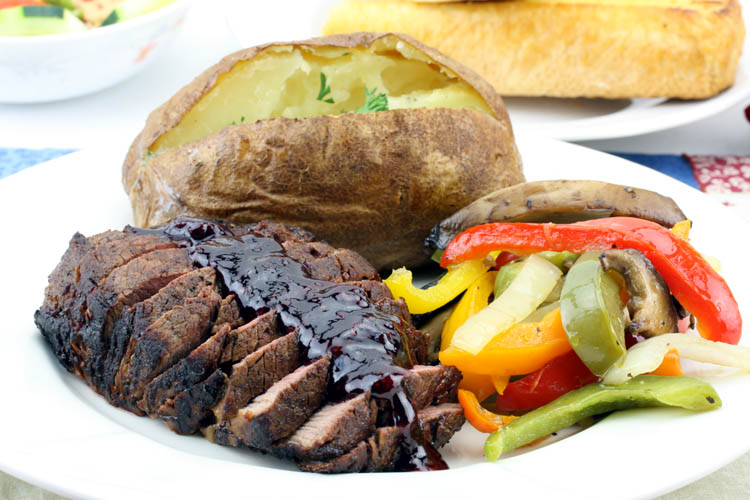
Serve the filet mignon with your favorite sides such as a baked potato or
loaded mashed potatoes, corn on the
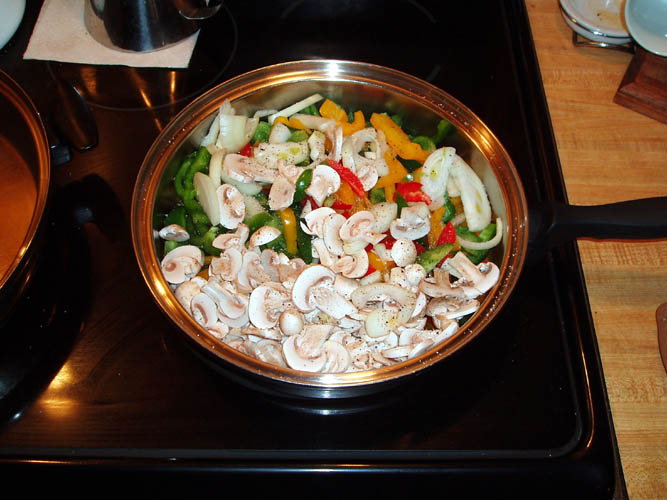
cob and salad of your choice. My bride and myself did the loaded mashed
potatoes which had some of the peeling left on a few of the potatoes and I
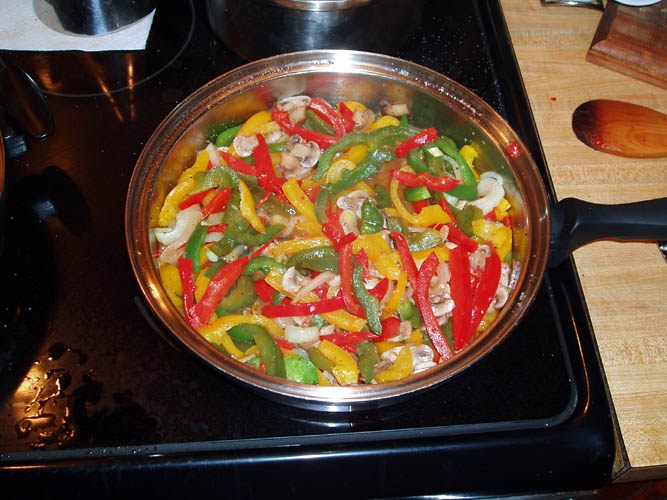
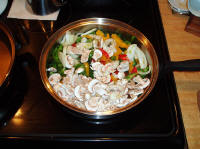
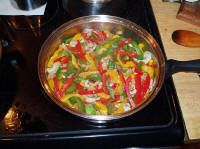
did a medley of red, yellow and green bell peppers, fresh baby Bella
mushrooms and onions sautéed in extra virgin olive oil seasoned with sea
salt and fresh ground black pepper corns and served with a toss salad and
Texas style garlic toast. The Pinot Noir wine was sipped along the way
and enjoyed a great meal with a wonderful person, my bride of 41 years.
I have been a firm believer that a good steak does not need a sauce but some
sauces do take a steak to the next level of flavor enhancement and the pinot
noir blackberry sauce is outstanding. I drizzled the sauce over the
steak and went back for a couple extra applications of the sauce before
finishing off the filet mignon. You will either like it or not and
will not know unless you try it.
IMPORTANT:
After desired cooking temperature is reached, remove meat from heat source
and let stand 10 to 15 minutes before carving. The amount of time required
for resting varies with the size of the cut of your meat. During this
resting time, the meat continues to cook (meat temperature will rise 5 to 20
degrees after it is removed from the heat source) and the juices
redistribute.
Cooking thermometers take the guesswork out of cooking, as they
measures the internal temperature of your cooked meat and poultry, or any
casseroles, to assure that a safe temperature has been reached, harmful
bacteria have been destroyed, and your food is cook perfectly.
A cooking or meat thermometer
should not be a "sometime thing." Use it every time you
prepare foods like poultry, roasts, hams, casseroles, meat loaves and egg
dishes.
If you don't regularly use a thermometer, you should get into the habit of
using one. A thermometer can be used for all foods, not just meat.
It measures the internal temperature of your cooked meat and poultry or any
casseroles, to assure that a safe temperature has been reached and that
harmful bacteria like certain strains of Salmonella and E. Coli O 157:H7
have been destroyed. Foods are properly cooked only when they are
heated at a high enough temperature to kill harmful bacteria that cause
food-borne illness.
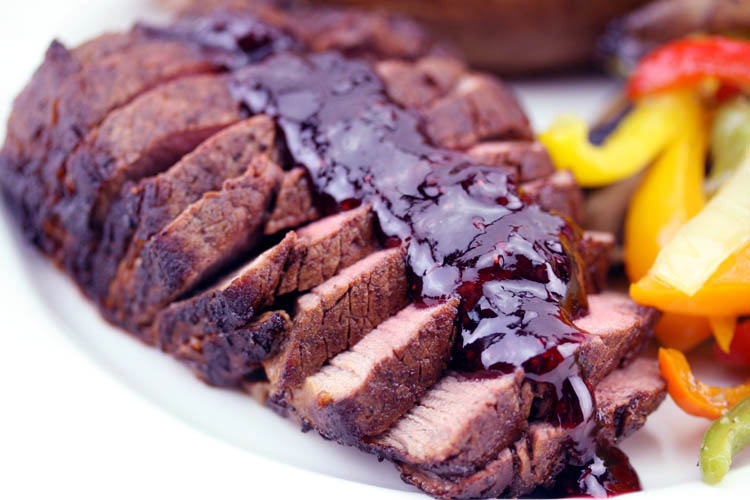
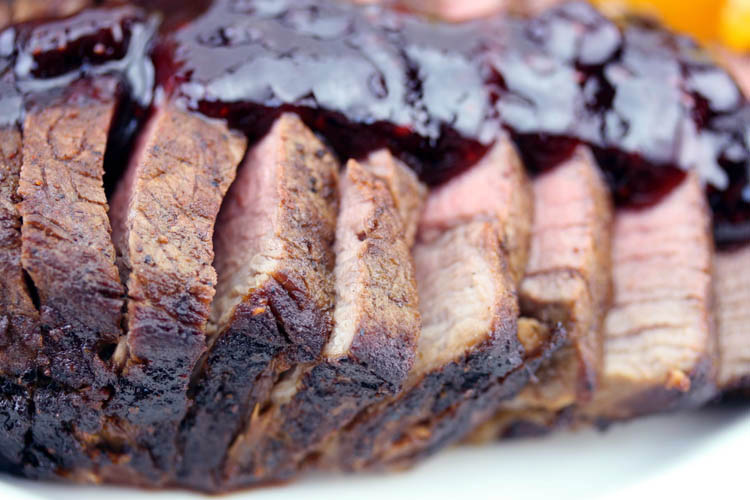
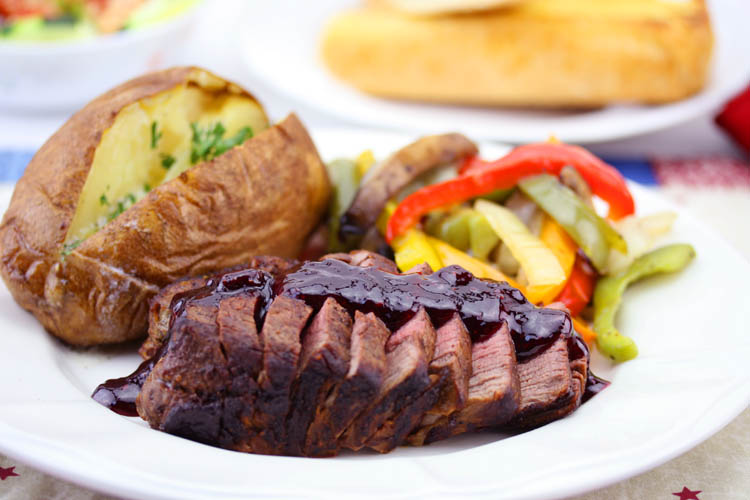
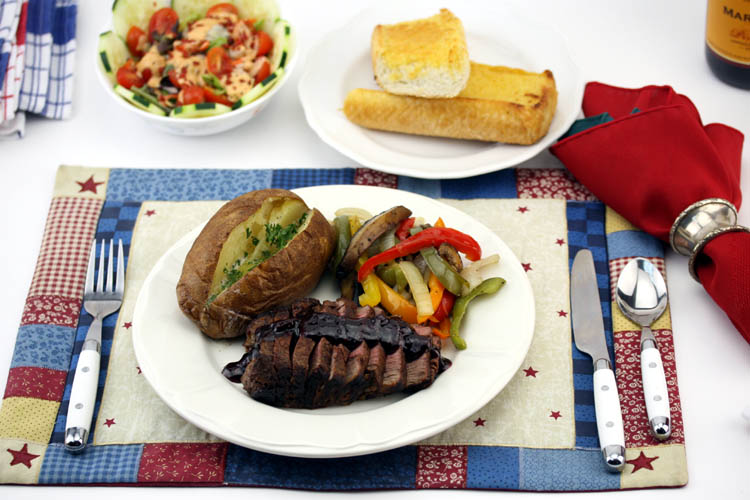
Above Filet Mignon prepared on 09-14-13 and was melt in your mouth
tender......say you say "Beautimous" out loud? I normally don't put
any kind of sauce on my steaks except for my Chateaubriand steak and this
filet mignon recipe. Above filet mignon cooked medium rare and I
cooked my bride's to medium.
Below pix of the filet mignon plated with the Pinot Noir Blackberry sauce
and sides: The steak would nearly melt in your mouth!
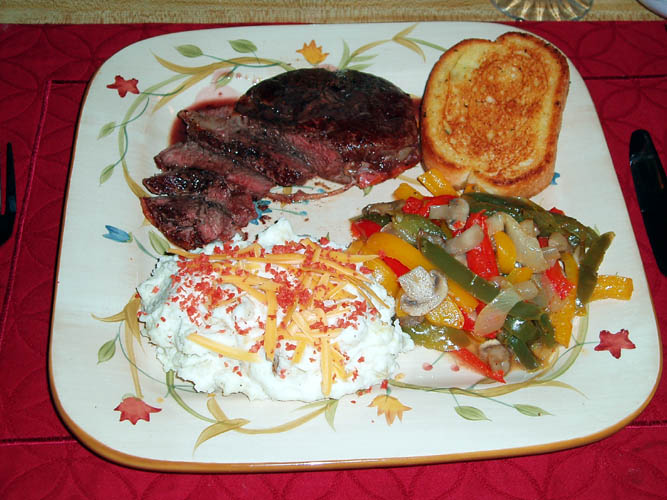
A few commented that the steak was about to "Moo", however
it was cooked medium rare and the liquid behind the filet mignon was the
Pinot Noir Blackberry sauce, not juices from the steak since it rested a
while before plating and slicing!
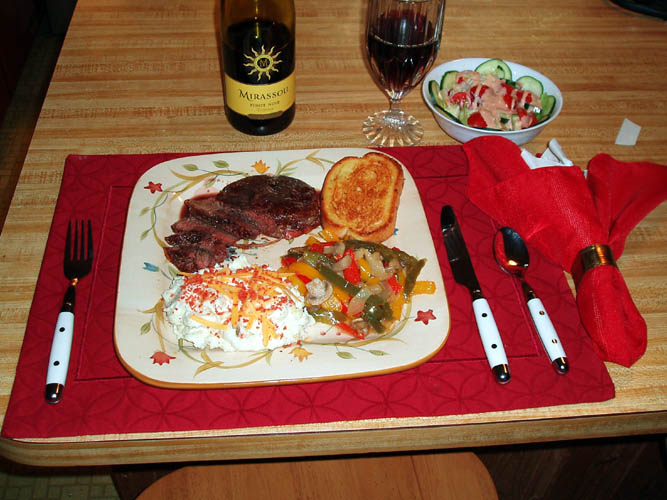
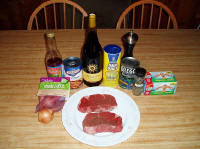
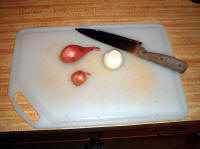
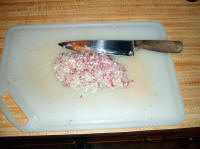
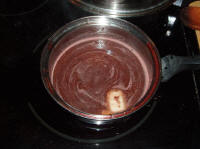
Below a few sequence pixs taken along the way:
Below an internal temperature chart for meats:
|
Beef and Lamb
|
|
Roasts,
Steaks & Chops |
|
|
|
Rare |
120 to 125 degrees F |
center is bright
red, pinkish toward the exterior portion |
|
Medium Rare |
130 to 135 degrees F |
center is very pink,
slightly brown toward the exterior portion |
|
Medium |
140 to 145
degrees F |
center is light
pink, outer portion is brown |
|
Medium Well |
150 to 155
degrees F |
not pink |
|
Well Done |
160 degrees F and
above |
steak is uniformly
brown throughout |
|
Ground Meat
|
160 to 165 degrees F
|
no longer pink but
uniformly brown throughout
|
|
Poultry
|
|
Poultry (Chicken & Duck) |
165 degrees F |
cook until juices run clear |
|
|
|
|
|
Turkey
NOTE: A 12-lb turkey can easily handle 60 to 90 minutes of
resting. During that time, temperature can rise 30 degrees if not
exposed to drafts.
|
165
degrees F
|
juices run clear -
leg moves easily
|
|
|
|
|
|
Stuffing
(cooked alone or in turkey) |
165
degrees F |
|
|
Pork
|
|
Roasts,
Steaks & Chops |
|
|
|
Medium |
140 to 145
degrees F |
pale pink center |
|
Well Done |
160 degrees F and
above |
steak is uniformly
brown throughout |
|
|
|
|
|
Pork ribs, pork shoulders, and beef
brisket |
160
degrees F
and above |
medium to well done |
| |
|
|
|
Sausage
(raw) |
160
degrees
F |
no longer pink |
|
|
|
|
|
Ham |
|
|
|
Raw |
160
degrees F |
|
|
Pre-cooked |
140
degrees F |
|
|
|
Seafood
|
|
Fish
(steaks, filleted or whole)
|
140
degrees F |
flesh is opaque,
flakes easily |
| |
|
|
|
Tuna,
Swordfish, & Marlin |
125
degrees F |
cook until
medium-rare (do not overcook or the meat will become dry and lose
its flavor |
| |
|
|
|
Shrimp |
|
|
|
Medium-size, boiling |
3
to 4 minutes |
cook until
medium-rare (do not overcook or the meat will become dry and lose
its flavor |
|
Large-size, boiling |
5
to 7 minutes |
cook until
medium-rare (do not overcook or the meat will become dry and lose
its flavor |
|
Jumbo-size, boiling |
7
to 8 minutes |
cook until
medium-rare (do not overcook or the meat will become dry and lose
its flavor |
|
|
|
|
|
Lobster |
|
|
|
Boiled, whole - 1 lb. |
12 to 15 minutes |
meat turns red and
opaque in center when cut |
|
Broiled, whole - 1 1/2 lbs. |
3
to 4 minutes |
meat turns red and
opaque in center when cut |
|
Steamed, whole - 1 1/2 lbs. |
15
to 20 minutes |
meat turns red and
opaque in center when cut |
|
Baked, tails - each |
15
minutes |
meat turns red and
opaque in center when cut |
|
Broiled, tails - each |
9
to 10 minutes |
meat turns red and
opaque in center when cut |
|
|
|
|
|
Scallops |
|
|
|
Bake |
12
to 15 minutes |
milky white or
opaque, and firm |
|
Broil |
|
milky white or
opaque, and firm |
|
|
|
|
|
Clams,
Mussels & Oysters |
|
point at which their
shells open - throw away any that do not open |
|
Bill aka Mickey Porter 03-15-09.
LEAVING ON A SPIRITUAL NOTE
If you do not know Jesus Christ as your Lord and Savior, please take this
moment to accept him by Faith into your Life, whereby Salvation will be
attained.
Ephesians 2:8 - 2:9 8 For by grace are ye saved through faith;
and that not of yourselves: [it is] the gift of God: 9 Not of works, lest
any man should boast.
Hebrews 11:1 “Now faith is the substance of things hoped for, the
evidence of things not seen.”
Romans 10:17 “So then faith cometh by hearing, and hearing by the
word of God.”
Open this
link about faith in the King James Bible.
Romans 10:9 “That if thou shalt confess with thy mouth the Lord
Jesus, and shalt believe in thine heart that God hath raised him from the
dead, thou shalt be saved.”
Open this
link of Bible Verses About Salvation, King
James Version Bible (KJV).
Hebrews 4:12 “For the word of God is quick, and powerful, and
sharper than any two edged sword, piercing even to the dividing asunder of
soul and spirit, and of the joints and marrow, and is a discerner of the
thoughts and intents of the heart.”
Romans 6:23 “For the wages of sin is death; but the gift of God is
eternal life through Jesus Christ our Lord.”
Romans 3:23 “For all have sinned, and come short of the glory of
God;”
Micah 6:8 “He hath shewed thee, O man, what is good; and what doth
the LORD require of thee, but to do justly, and to love mercy, and to walk
humbly with thy God?”
Philippians 4:13 "I can do all things through Christ which
strengtheneth me."
|
|